
Article
Are Tandem OLEDs the Next Big Thing?
Sep
Why Tandem OLED Is the Big Upgrade Everyone’s Talking About
If you’ve shopped for a new monitor, or laptop lately, you’ve probably run into three confusing letters over and over: OLED. But not all OLED is the same. WOLED, QD-OLED, and now Tandem OLED all use the same basic self-lit pixel technology, yet they get there in very different ways. Here’s what actually separates them, and why Tandem OLED is quickly becoming the one to beat.
WOLED: The Original OLED Formula
WOLED (White OLED) is the technology LG pioneered and it’s been the backbone of OLED TVs for over a decade. Instead of making red, green, and blue light directly, WOLED panels produce white light from every subpixel, then pass it through red, green, blue, and white color filters. That extra white subpixel is the key: it boosts brightness, which is historically where OLED has struggled compared to LCD.
The tradeoff is color volume. Because you’re filtering white light rather than generating pure colors, WOLED panels don’t hit the same punchy saturation levels as their quantum dot rivals. They’re still excellent for movies and general use, and they tend to handle ambient light and text clarity well, but they’ve been playing brightness catch-up for years.
QD-OLED: Samsung’s Answer
QD-OLED flips the approach. Instead of white light and filters, it uses a blue OLED layer paired with a quantum dot layer that converts some of that blue light into pure red and green. No white subpixel needed. The result is noticeably richer, more saturated color, which is why QD-OLED panels have become the darlings of colorists and gamers who want vivid HDR highlights.
The catch is that QD-OLED skips the polarizer layer, which helps with brightness but lets ambient light bounce around inside the panel. In bright rooms, you can get a purplish tint on black levels. It’s also why QD-OLED tends to shine most in darker viewing environments rather than sunlit living rooms or offices.
Tandem OLED: Stacking the Layers
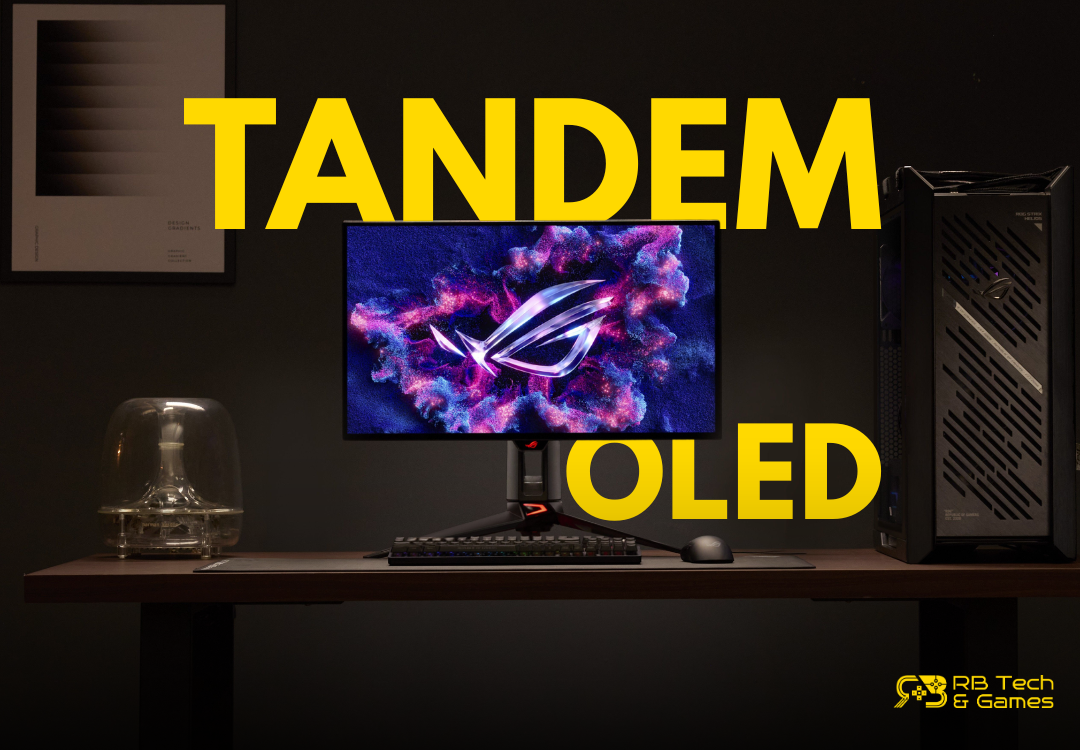
This is where things get interesting. Tandem OLED, LG Display’s fourth-generation panel technology that started rolling out in late 2025, doesn’t just change how color is produced. It changes how the light itself is generated. Instead of a single organic emissive layer, Tandem OLED stacks two (or with newer designs, up to five) light-emitting layers on top of each other.
Splitting the workload across multiple layers means each one has to work less hard to hit the same brightness, which is the whole point. Lower stress per layer translates into meaningfully higher peak brightness, often well over 1,300 nits in small highlights, real gains in longevity, and better resistance to burn-in over time.
So Why Is Tandem OLED Better?
It’s not that Tandem OLED wins on every single spec. QD-OLED still edges it out in raw color volume, especially in dark rooms with saturated, punchy content. But Tandem OLED brings a combination that neither WOLED nor QD-OLED could offer on its own: WOLED-level durability and ambient light handling, paired with dramatically improved brightness and color purity that closes most of the old gap with quantum dots.
For long editing sessions, bright rooms, competitive gaming where highlights matter, or just wanting a panel that ages gracefully, Tandem OLED’s layered approach is the more balanced, future-proof bet. QD-OLED remains the choice for people chasing the single most vivid picture in a controlled dark room, but for everyone else, Tandem OLED is shaping up to be the new standard to watch.
RB Tech & Games has stocked up some of the latest Tandem OLED offerings from ASUS ROG:
- Asus ROG Strix OLED XG27AQWMG | 232,500 PKR (with 2Y Local BURN-IN Warranty)
- Asus ROG Strix OLED XG27UQDMS | 298,000 PKR (with 2Y Local BURN-IN Warranty)
- Asus ROG Strix OLED PG32UCDM3 | 500,000 PKR (with 2Y Local BURN-IN Warranty)
Panel technology is moving fast this year, so keep an eye on how Tandem QD-OLED hybrids and next-gen subpixel layouts shake up this comparison even further in the months ahead.
